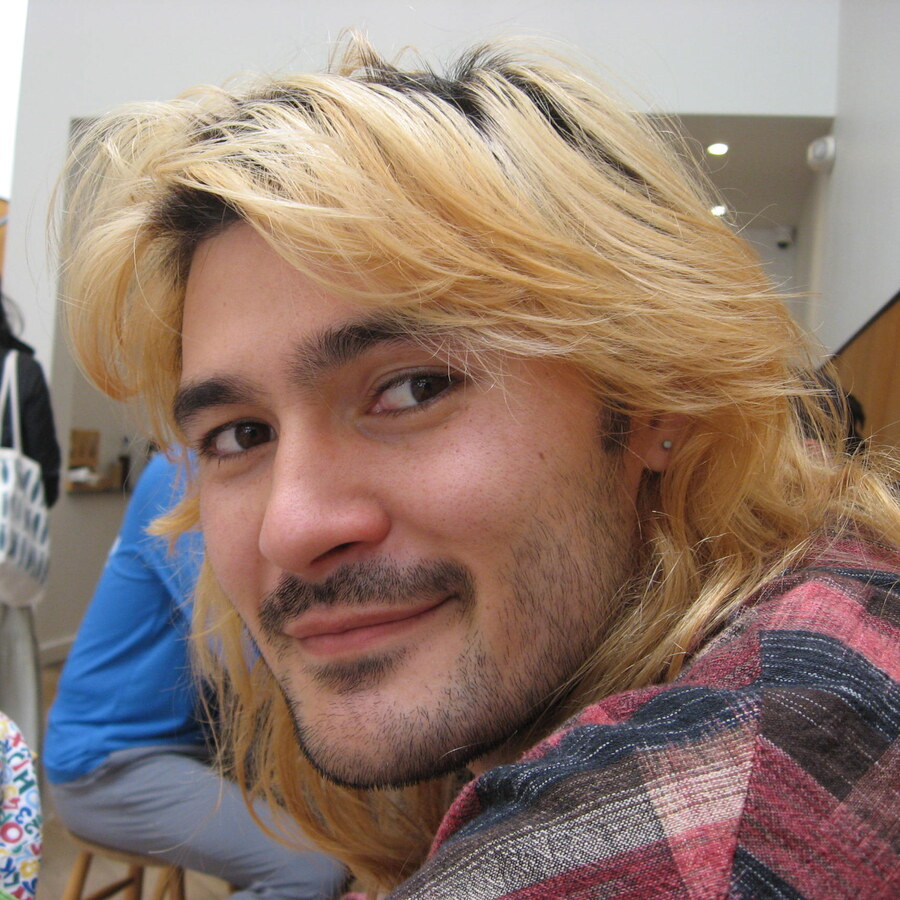
Hi!
I’m a PhD student at Berkeley and NSF GRFP fellow, working at the intersection of ML and scientific design (proteins, materials). I’m advised by Jennifer Listgarten and Sergey Levine. Lately I’ve been interested in understanding how domain-specific aspects of the scientific design problems I work on interact with various models and design algorithms. For instance, how might we enable experimentalists to more precisely specify the details of their problem settings and design desiderata?
During my undergrad (Caltech), I primarily spent time thinking about adaptive experiment design, Bayesian inference, GPs, and uncertainty quantification in Yisong Yue’s group. I also had a lot of fun teaching a variety of the core CS / ML courses.
Selected Publications
Leveraging Discrete Function Decomposability for Scientific Design [+blogpost]
JC Bowden, S Levine, J Listgarten
International Conference on Learning Representations (ICLR), 2026 [copy bibtex]
Active learning-assisted directed evolution
J Yang, RG Lal, JC Bowden, R Astudillo, MA Hameedi, S Kaur, M Hill, Y Yue, FH Arnold
Nature Communications, 2025 [copy bibtex]
For a complete list, see my Google Scholar page.
Research mentees
- Aathreya Kadambi (Berkeley undergrad, joined PhD program @ Stanford)
- Robert Yang (Berkeley undergrad)
Interested in working with me?
If you'd primarily like to chat research or collaborate and have no desire for me to mentor you, please reach out and make that clear, and I'd be happy to hop on a call. If you're an undergrad at Berkeley (or other) and are interested in being a research mentee, please note a few things. I receive more requests than I have capacity, so I apologize if I don't respond. If you're not specifically interested in working with me, but are just generally excited about the area I work in, then going to either of my advisors' websites and filling out their undergrad application is more likely to get you routed to an appropriate mentor. If you're specifically interested in working with me, you should tell me why in your email. For example, if you a) have carefully read one of my recent papers or a relevant paper from my advisors or someone else in the area, b) have an idea you've spent some time thinking about and feel could be interesting to work on, and c) include your thoughts about this in an email, I'm much more likely to read it and respond. We may not work on this exactly, but it signals that you can engage, and have, with something I'm interested in. This isn't to say that you need to have an idea beforehand (I certainly didn't in my first research experiences), but that (perhaps sadly) it helps.Outside of work, some things I sometimes like
being outside
- ■ urban inline skating
looking at paintings
- ■ creative processes (collaborative?)
reading things
- ■ Near to the Wild Heart | Clarice Lispector
- ■ To the Lighthouse | Virginia Woolf
- ■ Infinite Jest | David Foster Wallace
- ■ Timequake | Kurt Vonnegut
- ■ Gogol's short stories
- ■ Frankfurt school thought